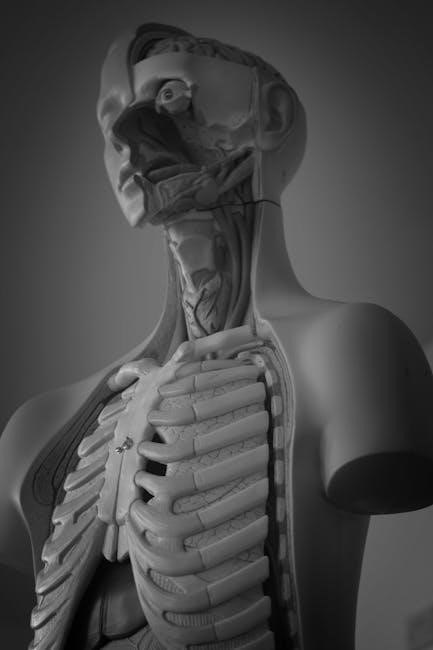
Human or Not, a social Turing game, mirrors the challenge of discerning AI from humans, relevant to A&P learning. This guide unlocks
the potential of laboratory manual answer keys, aiding comprehension and self-assessment.
What is a Laboratory Manual Answer Key?
A Laboratory Manual Answer Key, particularly for Human Anatomy & Physiology, is a resource providing correct responses to exercises within the lab manual. These keys aren’t merely lists of answers; they represent a detailed guide to understanding complex biological concepts. Much like the “Human or Not” game tests discernment, an answer key tests your comprehension of anatomical structures and physiological processes.
It typically includes solutions for labeling diagrams, identification questions, data analysis tasks, and microscopic observations. These keys serve as a benchmark for self-evaluation, allowing students to pinpoint areas needing further study. They are crucial for reinforcing learning and ensuring accurate understanding of A&P principles, mirroring the precision needed to distinguish human interaction from AI.
Importance of Answer Keys in A&P Learning
Answer keys are paramount in A&P learning, functioning as vital self-assessment tools. Similar to the “Human or Not” game’s immediate feedback, they provide instant confirmation of understanding, or highlight areas requiring review. They move beyond rote memorization, fostering a deeper grasp of anatomical relationships and physiological mechanisms.
Effective use of answer keys promotes active learning and critical thinking. Students can analyze discrepancies between their answers and the key, identifying conceptual gaps. This process mirrors the analytical skills needed to differentiate between human and AI responses. Ultimately, answer keys empower students to take ownership of their learning journey, building confidence and competence in A&P.
Understanding the Structure of A&P Lab Manuals
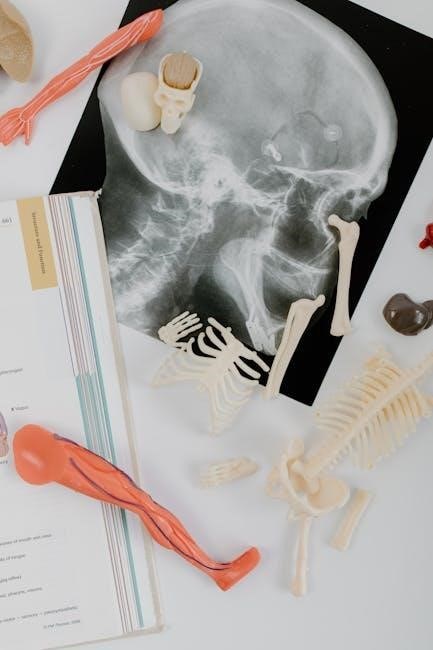
A&P lab manuals, like the interactions in Human or Not, present structured challenges. They typically include exercises, diagrams, and data analysis sections for comprehensive learning.
Typical Sections Found in A&P Lab Manuals
Human or Not’s conversational structure parallels the organized sections within A&P lab manuals. These manuals commonly begin with introductory material outlining safety protocols and essential lab techniques. Following this, you’ll find dedicated sections for each anatomical system – skeletal, muscular, nervous, cardiovascular, and respiratory – mirroring a focused, system-by-system approach.
Each system section typically includes pre-lab quizzes, detailed exercise instructions, observation activities, and spaces for data recording and analysis. Diagrams requiring labeling are prevalent, alongside identification tasks and questions designed to test comprehension. Post-lab questions reinforce learning and encourage critical thinking. Appendices often contain reference materials like anatomical charts and common measurement conversions, aiding in accurate interpretation and analysis, much like discerning a human from an AI.
Common Exercise Types and Their Corresponding Answer Key Content
Similar to the quick judgments in Human or Not, A&P lab exercises demand precise answers. Common exercises include labeling diagrams – answer keys provide correct anatomical identifications. Identification stations require naming structures; keys list the proper terms. Data analysis exercises, often involving physiological measurements, necessitate correct calculations and interpretations, fully detailed in the answer key.
Microscopic slide identification exercises are frequent; keys specify tissue types and key features. Clinical application scenarios present patient cases; keys outline diagnostic reasoning. Dissection exercises, while less directly answered, have keys detailing expected anatomical relationships. Essentially, answer keys offer a benchmark for accurate observation, analysis, and application of A&P principles.
Locating and Accessing A&P Lab Manual Answer Keys (PDF)
Finding answer keys, like playing Human or Not, requires investigation. Official publisher resources and third-party platforms offer PDF access, but caution is advised.
Official Publisher Resources
Accessing answer keys directly from publishers is the most reliable method, mirroring the direct interaction in a game like Human or Not. Major publishers – Pearson, McGraw-Hill, and Wiley – often provide supplemental materials, including answer keys, to instructors who adopt their textbooks and lab manuals.
These resources are typically password-protected and require verification of instructor status. Students may gain access through their learning management system (LMS) if the instructor chooses to distribute them. Publishers’ websites frequently have dedicated instructor resource areas. Be prepared to register and provide course details to unlock these materials. Always prioritize official sources to ensure accuracy and avoid misinformation, much like verifying a human contact!
Third-Party Websites and Online Platforms
Numerous websites claim to offer A&P lab manual answer keys, echoing the challenge of identifying “human” responses in a game like Human or Not. These platforms often operate in a gray area regarding copyright and legality. While some may provide legitimate study aids, many host inaccurate or incomplete answer keys.
Exercise extreme caution when using these resources. Always cross-reference information with your textbook and lab manual. Be wary of sites requiring payment for access, as the quality is not guaranteed. Prioritize reputable educational platforms and forums where students share verified solutions. Remember, relying solely on third-party keys hinders genuine learning.
Potential Risks of Using Unofficial Answer Keys
Similar to the deceptive nature of Human or Not, where AI mimics human conversation, unofficial answer keys can be misleading. Utilizing these resources carries significant risks. Inaccurate answers can reinforce incorrect understanding, hindering your ability to apply A&P concepts.
Furthermore, relying on unauthorized materials violates academic integrity policies, potentially leading to serious consequences. Copyright infringement is also a concern, as distributing or accessing these keys illegally is unethical and unlawful. Prioritize legitimate study methods and official resources to ensure a solid foundation in anatomy and physiology.

Specific Anatomical Systems & Corresponding Lab Exercises
Like the Human or Not game testing perception, A&P labs require precise identification. Answer keys focus on skeletal, muscular, nervous, cardiovascular, and respiratory systems’ structures.
Skeletal System Lab & Answer Key Focus
Skeletal System labs commonly involve identifying bones, features (processes, foramina), and bone markings. Answer keys provide correct labeling of diagrams, crucial for mastering anatomical terminology. Expect exercises on bone classification – long, short, flat, irregular – and understanding skeletal articulation types like sutures, pivot, and ball-and-socket joints.
Keys detail responses to questions about bone fractures (open, closed, comminuted) and bone remodeling processes. Like the Human or Not game’s need for discernment, students must differentiate between anatomical structures. Furthermore, practical applications, such as determining bone age from radiographs, are often included, with detailed explanations in the answer key. Understanding axial versus appendicular skeletons is also key.
Muscular System Lab & Answer Key Focus
Muscular System labs emphasize identifying skeletal muscles, their origins, insertions, actions, and innervation. Answer keys provide precise muscle labeling on diagrams, vital for anatomical accuracy. Expect exercises on muscle fiber types – skeletal, smooth, cardiac – and understanding muscle contraction mechanisms, including the sliding filament theory.
Keys detail responses concerning muscle twitch, tetanus, and fatigue. Similar to the Human or Not game’s challenge of identifying authenticity, students must accurately pinpoint muscle functions. Practical applications, like electromyography (EMG) interpretation, are common, with detailed explanations. Understanding muscle groups (agonists, antagonists, synergists) is also crucial, as detailed in the answer key.
Nervous System Lab & Answer Key Focus
Nervous System labs concentrate on brain dissections, spinal cord identification, and nerve pathway tracing. Answer keys offer detailed labeling of brain structures – lobes, gyri, sulci – and cranial nerve functions. Expect exercises on neuron anatomy, synapse transmission, and action potential propagation, mirroring the complex communication found in the Human or Not game.
Keys clarify responses regarding neurotransmitters and their effects. Reflex arc experiments are common, with answer keys explaining the physiological basis of reflexes. Understanding the central and peripheral nervous systems, and their subdivisions, is vital. Practical applications, like interpreting EEG or nerve conduction studies, are often included with thorough explanations.
Cardiovascular System Lab & Answer Key Focus
Cardiovascular System labs typically involve heart dissections, identifying chambers, valves, and major vessels. Answer keys provide precise anatomical labeling and explain blood flow pathways. Expect exercises on analyzing ECGs, determining heart rates, and understanding cardiac output, mirroring the real-time responses tested in Human or Not’s interactions.
Labs often cover blood pressure measurements and factors influencing it, with keys detailing normal ranges and physiological explanations. Histological slides of blood vessels (arteries, veins, capillaries) are common, requiring accurate identification. Understanding the circulatory system’s role in delivering oxygen and nutrients is crucial, alongside explanations of related pathologies.
Respiratory System Lab & Answer Key Focus
Respiratory System labs emphasize lung anatomy – identifying lobes, bronchi, and alveoli – often through dissection or models. Answer keys detail gas exchange mechanisms and pressure gradients, crucial for understanding breathing. Spirometry exercises, measuring lung volumes and capacities, are common, requiring data interpretation skills, similar to discerning patterns in Human or Not.
Microscopic examination of lung tissues (alveolar structure, ciliated epithelium) is frequent, demanding accurate identification. Labs explore respiratory rate, depth, and their regulation, with keys explaining control centers in the brain. Understanding pathologies like asthma or pneumonia is also vital, alongside the mechanics of oxygen and carbon dioxide transport.
Types of Questions Found in A&P Lab Manual Answer Keys
Like the Human or Not game’s discernment, keys assess labeling, identification, data analysis, and microscopic structures, testing practical application of A&P concepts.
Labeling Diagrams
Labeling diagrams are a cornerstone of A&P lab manuals, demanding precise anatomical knowledge. Answer keys provide the correct identifications for structures, mirroring the critical evaluation in games like Human or Not, where distinguishing details is key. These exercises often require students to identify bones, muscles, nerves, or organs directly on an illustration.
Effective answer keys don’t just present labels; they may also include hints regarding relative positioning or functional associations. Students can compare their attempts, noting discrepancies and reinforcing their understanding. The process parallels the Turing test’s challenge – accurately identifying components within a complex system. Mastering diagram labeling builds a foundational visual vocabulary essential for further study.
Identifying Structures
Identifying structures within dissected specimens or microscopic slides forms a core component of A&P labs. Answer keys serve as crucial references, confirming correct identifications – a skill akin to the discernment required in the Human or Not game, distinguishing between human and AI responses. These exercises test a student’s ability to apply anatomical knowledge to real-world (or simulated) observations.
Keys often include detailed descriptions alongside the correct name, aiding comprehension of structural characteristics. Students can actively compare their observations with the key, pinpointing areas needing further review. This iterative process strengthens observational skills and solidifies anatomical understanding, mirroring the analytical thinking needed for complex problem-solving.
Analyzing Data & Interpreting Results
A&P labs frequently involve collecting physiological data – heart rate, blood pressure, respiratory volumes – requiring students to analyze trends and draw conclusions. Answer keys, in this context, provide expected results and explain the underlying physiological principles. This process parallels the critical evaluation in Human or Not, where players analyze conversational cues.
Keys don’t simply offer numbers; they detail why those results are observed, linking data to anatomical structures and physiological processes. Students learn to interpret variations, identify potential errors, and understand the limitations of experimental design. Mastering this skill is vital for future healthcare professionals, fostering evidence-based decision-making.
Microscopic Identification
A significant portion of A&P labs involves identifying tissues and cells under the microscope. Answer keys for these exercises provide labeled images and detailed descriptions of key histological features. This is akin to the discerning process in Human or Not, where subtle cues differentiate human and AI responses.
Effective keys highlight crucial characteristics – cell shape, arrangement, staining patterns – aiding students in accurate identification. They also explain the functional significance of these microscopic structures. Students learn to correlate structure with function, a cornerstone of A&P. Mastering microscopic identification builds a foundational understanding for advanced studies.
Utilizing Answer Keys for Effective Learning
Like the Human or Not game’s feedback loop, answer keys facilitate self-assessment, pinpointing knowledge gaps and reinforcing correct concepts for improved A&P mastery.
Self-Assessment and Identifying Weaknesses
Employing an A&P lab manual answer key isn’t merely about confirming correct responses; it’s a powerful tool for proactive self-evaluation. Much like the Human or Not game challenges players to discern patterns, students can use answer keys to identify areas where their understanding falters.
Begin by completing lab exercises independently, then meticulously compare your answers. Note discrepancies not as failures, but as opportunities for focused review. Are you consistently mislabeling structures? Do you struggle with data interpretation? Pinpointing these weaknesses allows you to redirect your study efforts effectively. This iterative process, mirroring the game’s conversational analysis, fosters deeper comprehension and long-term retention of complex anatomical and physiological concepts.
Comparing Your Answers to the Key
After completing each lab exercise, a direct comparison with the answer key is crucial – akin to evaluating responses in the Human or Not game. Don’t simply check for correctness; analyze how your answer differs. Was it a labeling error, a misinterpretation of data, or a fundamental misunderstanding of the concept?
Systematically review each question, noting the specific areas of divergence. This isn’t about assigning blame, but about identifying gaps in your knowledge. Consider the key’s explanation – does it offer a different perspective or highlight a detail you overlooked? This comparative analysis transforms the answer key from a simple “correct/incorrect” tool into a valuable learning resource, fostering a deeper grasp of A&P principles.
Understanding the Rationale Behind Correct Answers
Merely knowing the correct answer isn’t sufficient; grasping the why is paramount, much like discerning the logic behind a human’s responses in Human or Not. A quality answer key doesn’t just present solutions, it elucidates the underlying physiological principles.
Explore the explanations provided; Why is a particular structure identified as such? What data supports a specific conclusion? How does this relate to broader anatomical or physiological concepts? This deeper understanding solidifies your knowledge and prepares you for application in novel scenarios. Treat the answer key as a teaching tool, not just a source of answers, fostering true comprehension.
Troubleshooting Common Issues with Answer Keys
Like navigating the unpredictable interactions in Human or Not, answer key issues arise. Expect potential problems with missing answers, PDF compatibility, or discrepancies.
Missing or Incorrect Answers
Encountering missing or incorrect answers within an A&P lab manual answer key can be frustrating, mirroring the uncertainty of identifying a human versus AI in a game like Human or Not. First, double-check the question itself and ensure you understand the expected response format; Compare your work meticulously against the manual’s instructions.
If an answer genuinely appears absent or demonstrably wrong, consult with your instructor or teaching assistant. They may be aware of errata or provide clarification. Online forums dedicated to A&P can also offer peer support, but verify information cautiously. Remember, unofficial sources may contain inaccuracies. Document any discrepancies you find to facilitate correction and improve the key’s overall accuracy for future students.
Discrepancies Between Manual and Answer Key
Similar to the challenges in Human or Not – discerning genuine responses from imitations – discrepancies between an A&P lab manual and its answer key require careful investigation. These can arise from printing errors, differing interpretations of diagrams, or updates to anatomical understanding not yet reflected in the key.
First, meticulously compare the question in the manual to the corresponding answer in the key. If a conflict exists, consult your instructor. They are the ultimate authority on correct answers. Document the discrepancy with specific details (question number, page number) to aid in resolution. Remember, the manual’s content supersedes any key inaccuracies. Reporting these issues helps improve future editions.
PDF Compatibility Issues
Much like navigating the digital landscape in a game like Human or Not – ensuring smooth interaction – PDF compatibility can present hurdles when accessing A&P lab manual answer keys. Issues may include corrupted files, requiring re-downloading from official sources. Older PDF readers might not support newer features or formatting, leading to display errors.
Ensure you have the latest Adobe Acrobat Reader or a compatible PDF viewer. Try opening the file on different devices or browsers. If problems persist, convert the PDF to another format (like Word) as a last resort, though formatting may be lost. Always prioritize obtaining a clean, functional PDF from reputable sources.
Legal and Ethical Considerations
Respecting copyright is crucial, similar to the integrity of interactions in Human or Not. Utilizing answer keys ethically avoids academic dishonesty and protects intellectual property.
Copyright and Intellectual Property
Human Anatomy & Physiology lab manual answer keys are protected by copyright laws, belonging to publishers and authors. Unauthorized distribution or reproduction of these materials constitutes a violation of these rights, mirroring the ethical considerations within the Human or Not game – respecting boundaries.
Accessing answer keys through unofficial channels, like unauthorized PDF downloads, can lead to legal repercussions. Students and educators must adhere to licensing agreements and purchase legitimate copies. Sharing keys online, even amongst peers, infringes upon intellectual property. Understanding these legal frameworks ensures responsible use and supports the creators of valuable educational resources, fostering a culture of academic honesty and respect for ownership.
Academic Integrity and Cheating
Utilizing Human Anatomy & Physiology lab manual answer keys to simply copy answers, rather than understand the underlying concepts, is a form of academic dishonesty, akin to an AI attempting to imitate human understanding in a Human or Not game. This undermines the learning process and devalues genuine academic achievement.
Submitting work that isn’t your own, even with the aid of an answer key, violates institutional policies and can result in severe consequences, including failing grades or expulsion. Answer keys are intended as learning tools for self-assessment and identifying areas needing improvement, not as shortcuts to bypass critical thinking and knowledge acquisition. Maintaining academic integrity is paramount.
The Future of A&P Lab Manuals and Answer Keys
Like the Human or Not game’s AI evolution, A&P resources will embrace digitalization, interactive keys, and potentially AI-powered verification for enhanced learning.
Digitalization and Interactive Answer Keys
The shift towards digital A&P lab manuals is mirroring trends seen in games like Human or Not, where interaction is key. Traditional PDF answer keys are evolving into dynamic, interactive platforms. These platforms offer immediate feedback, allowing students to self-assess and pinpoint areas needing improvement. Imagine clickable diagrams revealing correct labels, or data analysis exercises with built-in scoring and explanations.
Furthermore, digital formats enable the incorporation of multimedia – videos demonstrating dissections, 3D models of anatomical structures, and virtual microscopy slides. This immersive experience surpasses static textbook images. Interactive answer keys can also adapt to individual learning styles, providing customized support and challenges. This evolution promises a more engaging and effective learning journey for students studying human anatomy and physiology.
Integration with Learning Management Systems
Seamless integration of A&P lab manual answer keys with Learning Management Systems (LMS) – like a real-time challenge in Human or Not – is becoming standard. This integration allows instructors to automatically grade assignments, track student progress, and identify areas where the class struggles collectively. Students benefit from instant feedback and a centralized hub for all course materials.
LMS integration also facilitates personalized learning paths. The system can recommend specific exercises or resources based on a student’s performance on previous assignments. Furthermore, it streamlines communication between instructors and students, fostering a more collaborative learning environment. This connectivity enhances the overall efficiency and effectiveness of A&P education.
AI-Powered Answer Key Generation and Verification
The future of A&P lab manual answer keys lies in Artificial Intelligence, mirroring the sophisticated mimicry seen in games like Human or Not. AI can automate answer key creation, reducing instructor workload and ensuring accuracy. More importantly, AI algorithms can verify existing answer keys, identifying potential errors or ambiguities.
This technology extends beyond simple matching; AI can analyze student responses for nuanced understanding, even accepting alternative correct answers. Furthermore, AI can personalize answer keys based on the specific lab setup and materials used. This dynamic approach promises more reliable and effective learning tools for A&P students and educators alike.
Be First to Comment